Bama Festival
A community-led service design proposal to help the Wujal Wujal community keep Yalanji culture alive.
Warning: Aboriginal and Torres Strait Islander peoples are advised that this project contains images, names, and words of people who may have passed away. All imagery is reproduced from published, cited sources; see references.
I acknowledge Wujal Wujal as the home of the Kuku Yalanji, Kuku Nyungul and Jalunji clans — the ‘rainforest people’, the traditional owners and custodians of the Country. I recognise and respect Bama cultural heritage, values, beliefs, and continuing relationships and responsibility to their land and sea Country. I honour and respect the Elders past, present and future.
My team saw a flood. I looked for what the water left behind, and found the crisis the elders named themselves.
Wujal Wujal sits on the flood-prone banks of the Bloomfield River in Far North Queensland. When our team treated flooding as the community’s emergency, I looked past the obvious disaster for the slower one underneath, and found the crisis the elders named themselves: the loss of Yalanji culture, language, and fire practice. Bama Festival is the design response, a community-led annual festival that strengthens cultural identity, supports healing, and carries knowledge between generations through food, art, dance, and music. Reframing the problem, from the flood to the cultural loss beneath it, was the single most important move in the project.
Cyclone Jasper took the art centre and postponed the festival — but the loss started generations earlier.
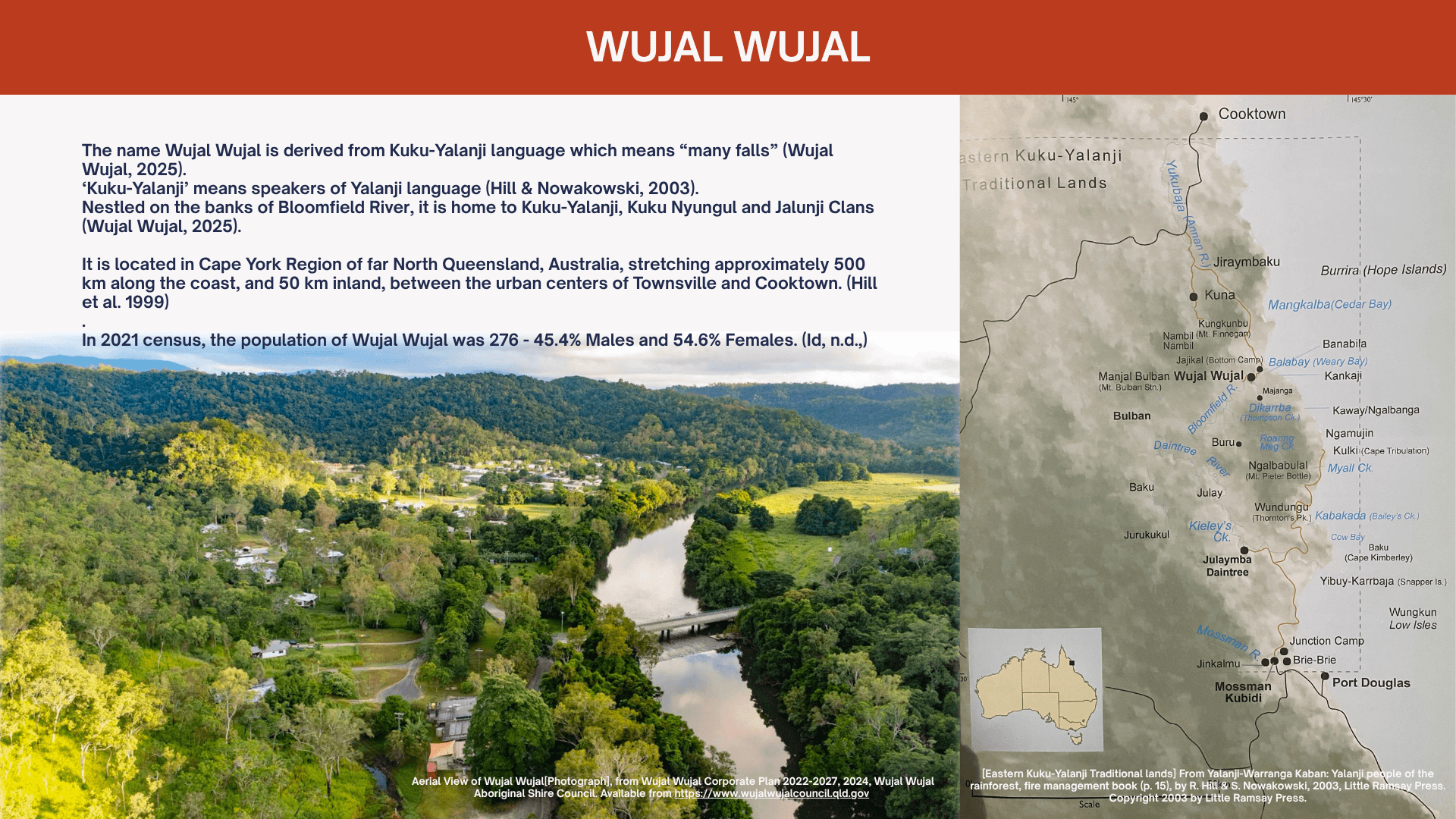
Wujal Wujal, meaning “many falls” in Kuku-Yalanji, lies in the Cape York region between Townsville and Cooktown, home to the Kuku-Yalanji, Kuku Nyungul and Jalunji clans, with a population of 276 at the 2021 census.
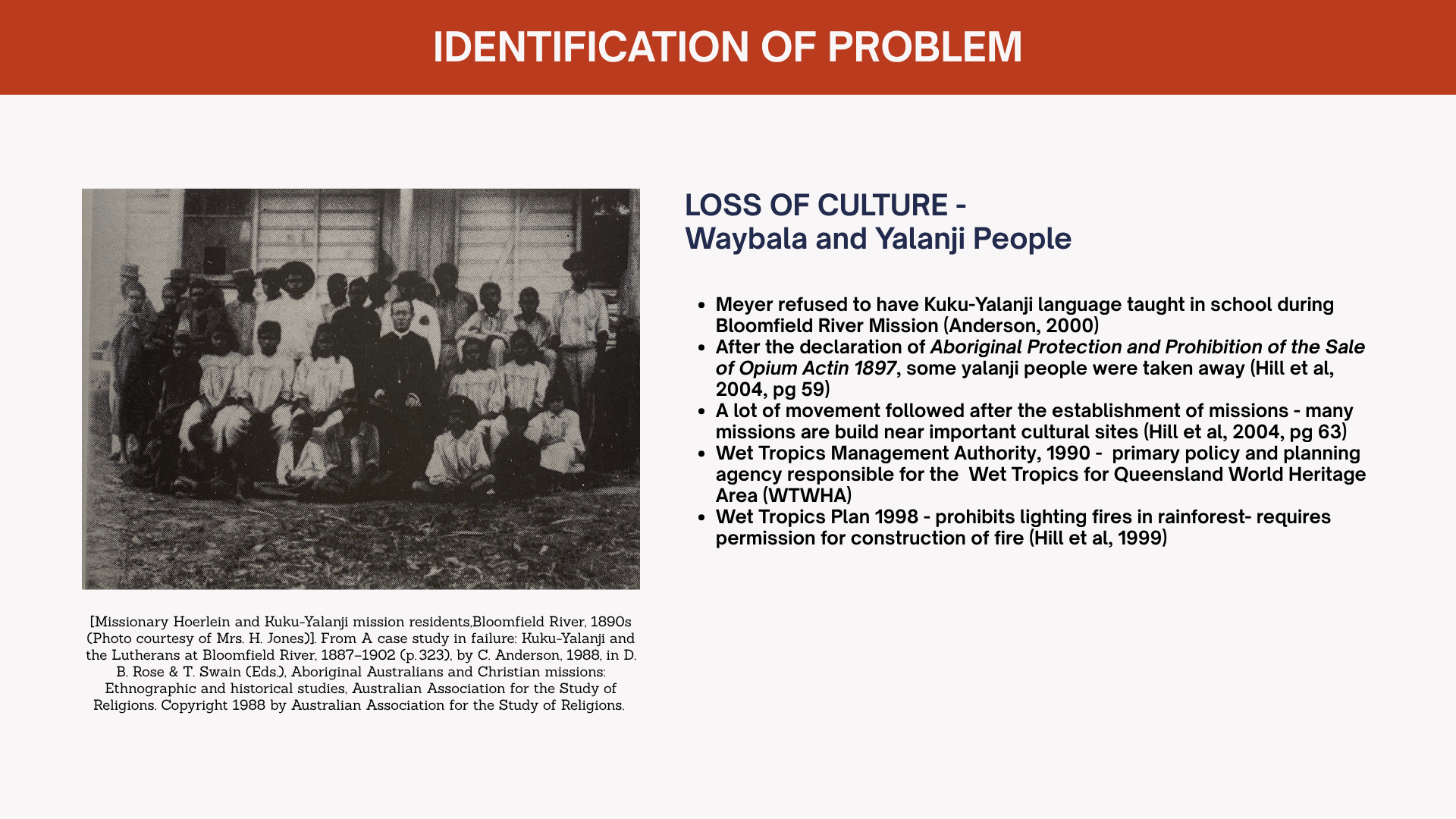
In 2023, Cyclone Jasper devastated the region. The Bana Yirriji Art Centre, a key meeting place where Yalanji people preserved culture and shared stories through art, was demolished, replaced only by a temporary venue with no clear future. The biennial Laura Festival was postponed to 2026 for lack of funding. These acute losses sit on top of a much older one: at the Bloomfield River Mission, Missionary Meyer refused to allow Kuku-Yalanji to be taught in school; the 1897 Aboriginal Protection Act saw people taken away; and the Wet Tropics Plan (1998) restricted the cultural fire practice central to Yalanji life. The determination to keep culture alive persists, and the community’s Jam Room, launched after the cyclone for healing, is one sign of it.
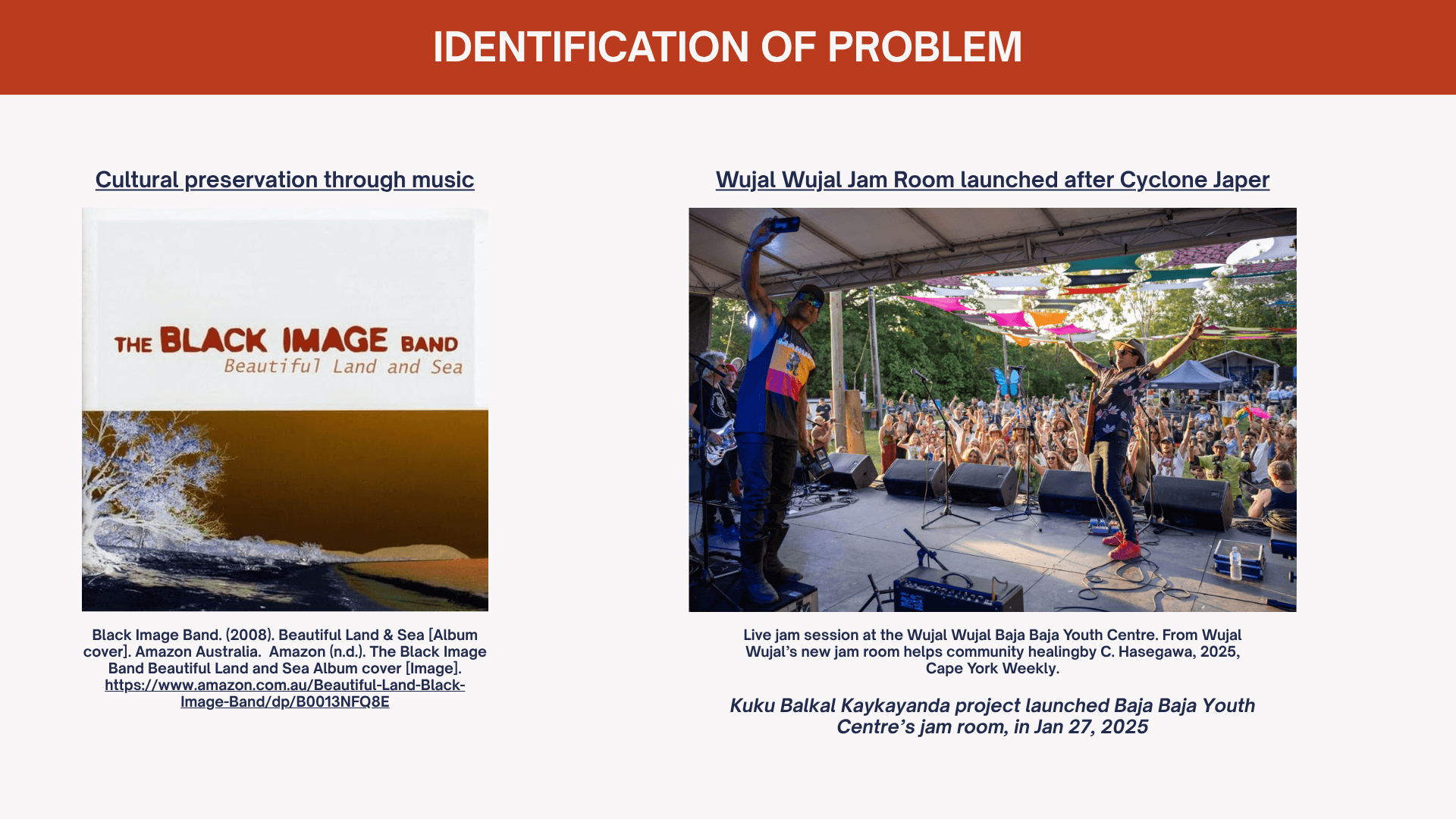
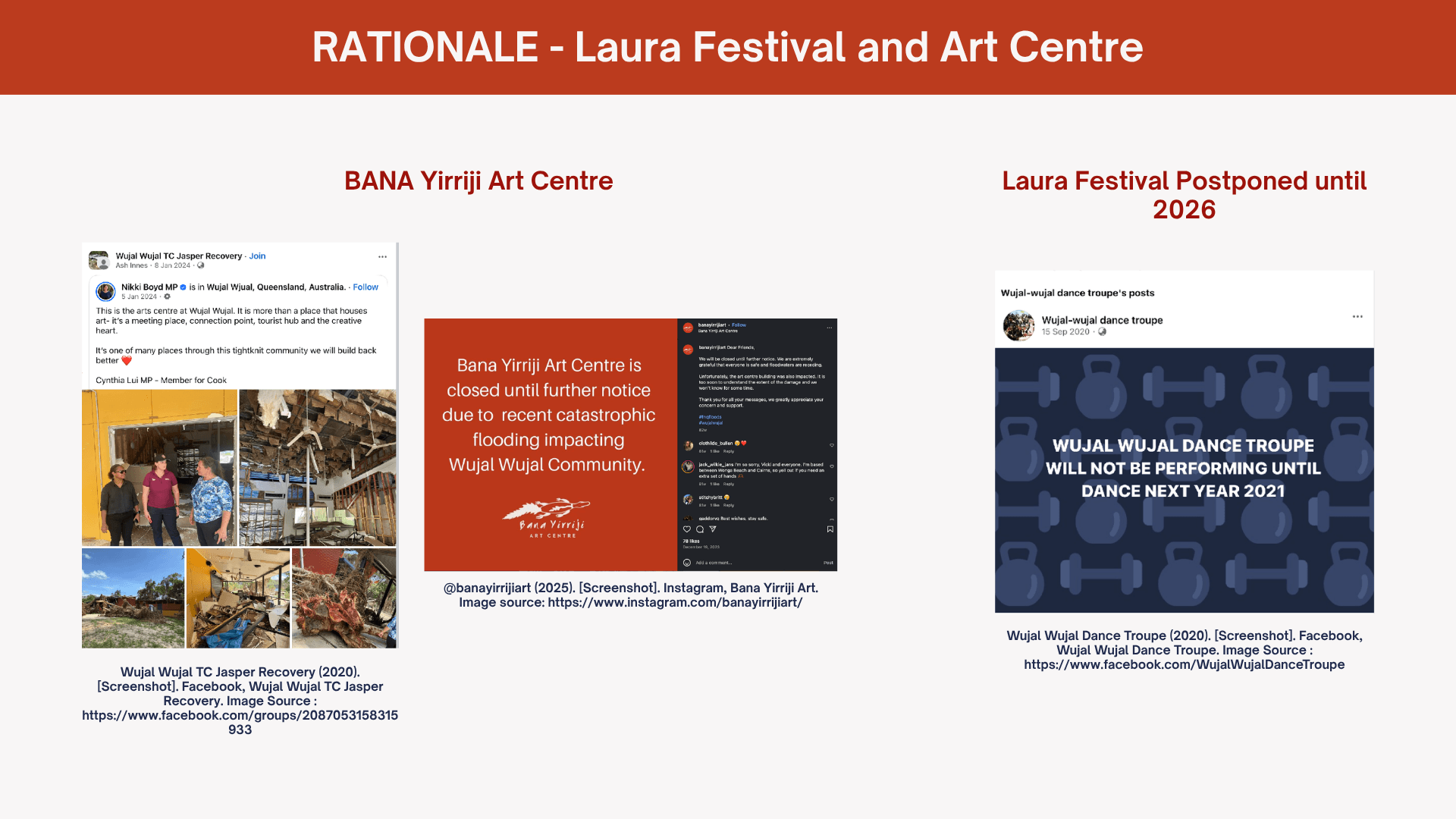
Five frameworks, starting deliberately with a First Nations one.
Each framework translated into a specific design decision, not just theoretical grounding. I began with a First Nations methodology, before any Western model.
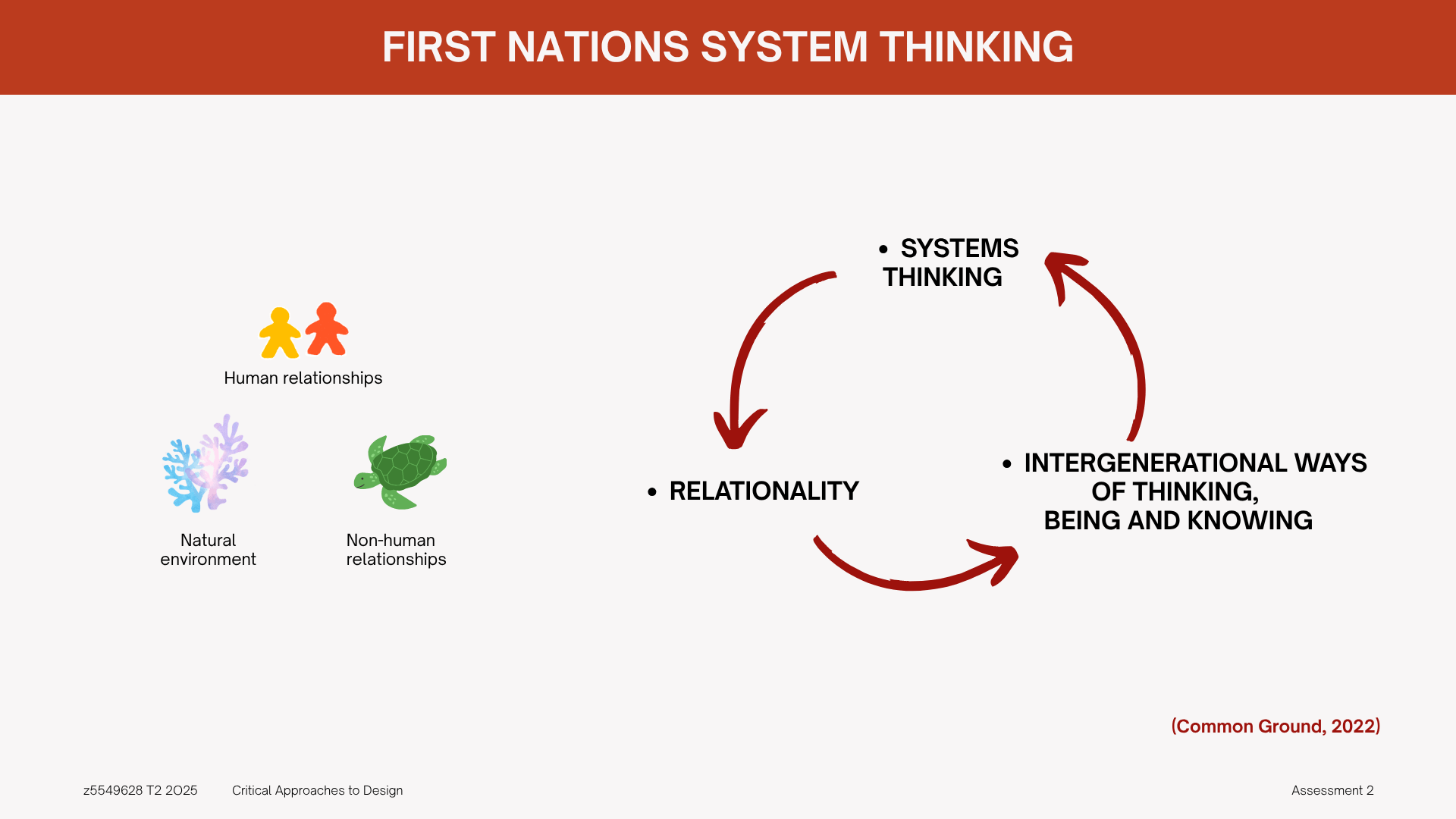
First Nations Systems Thinking
Recognises that natural environment, human relationships, and non-human relationships are interconnected, and that decisions made today reach both past and future ancestors. This shaped the festival’s core logic: designing for intergenerational continuity, not a one-off event.
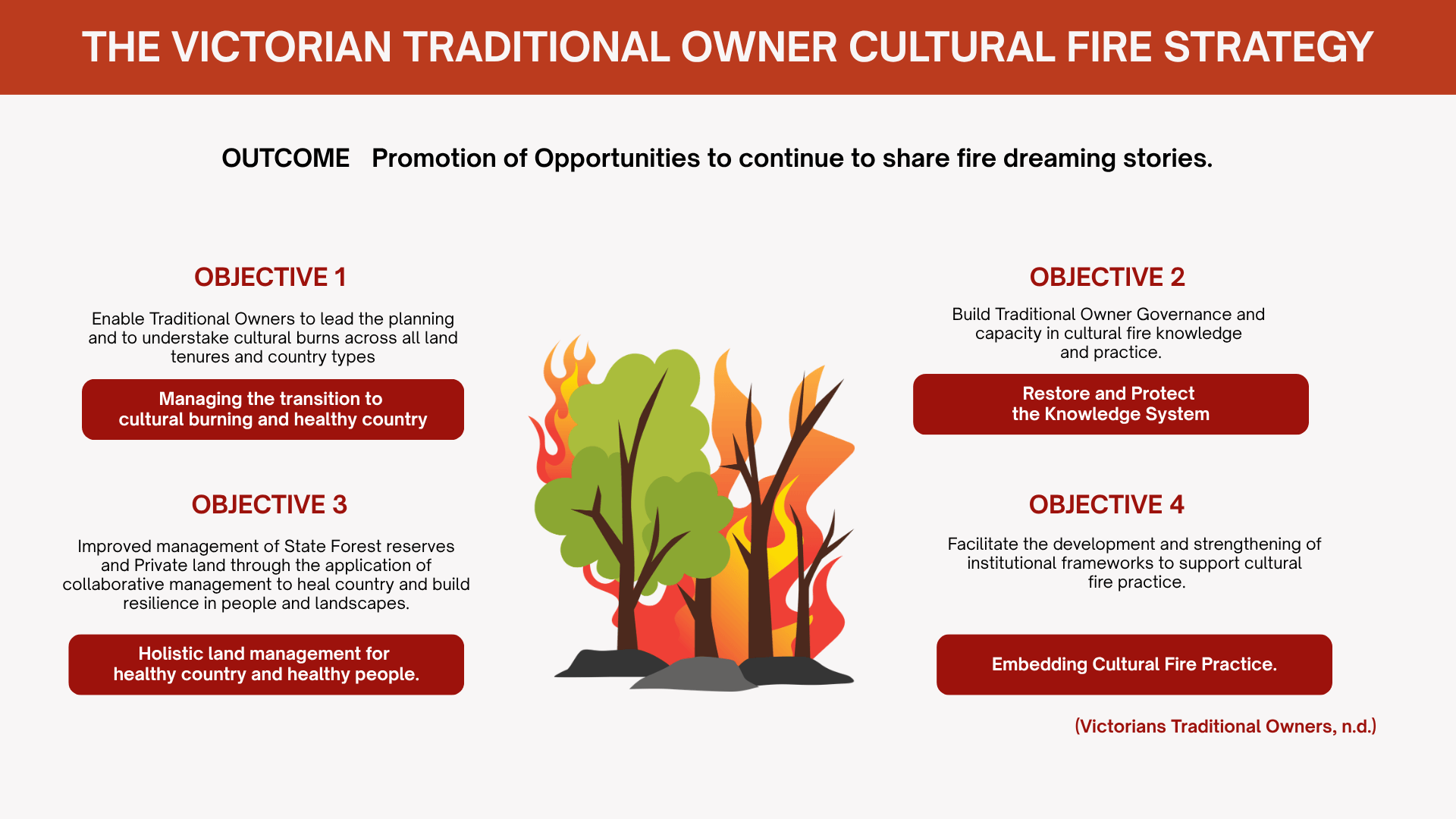
Victorian Traditional Owner Cultural Fire Strategy
Co-designed with Traditional Owners to keep sharing fire dreaming stories. Because fire stories differ between nations, this pushed me to focus the design exclusively on Yalanji fire practice rather than generalising.
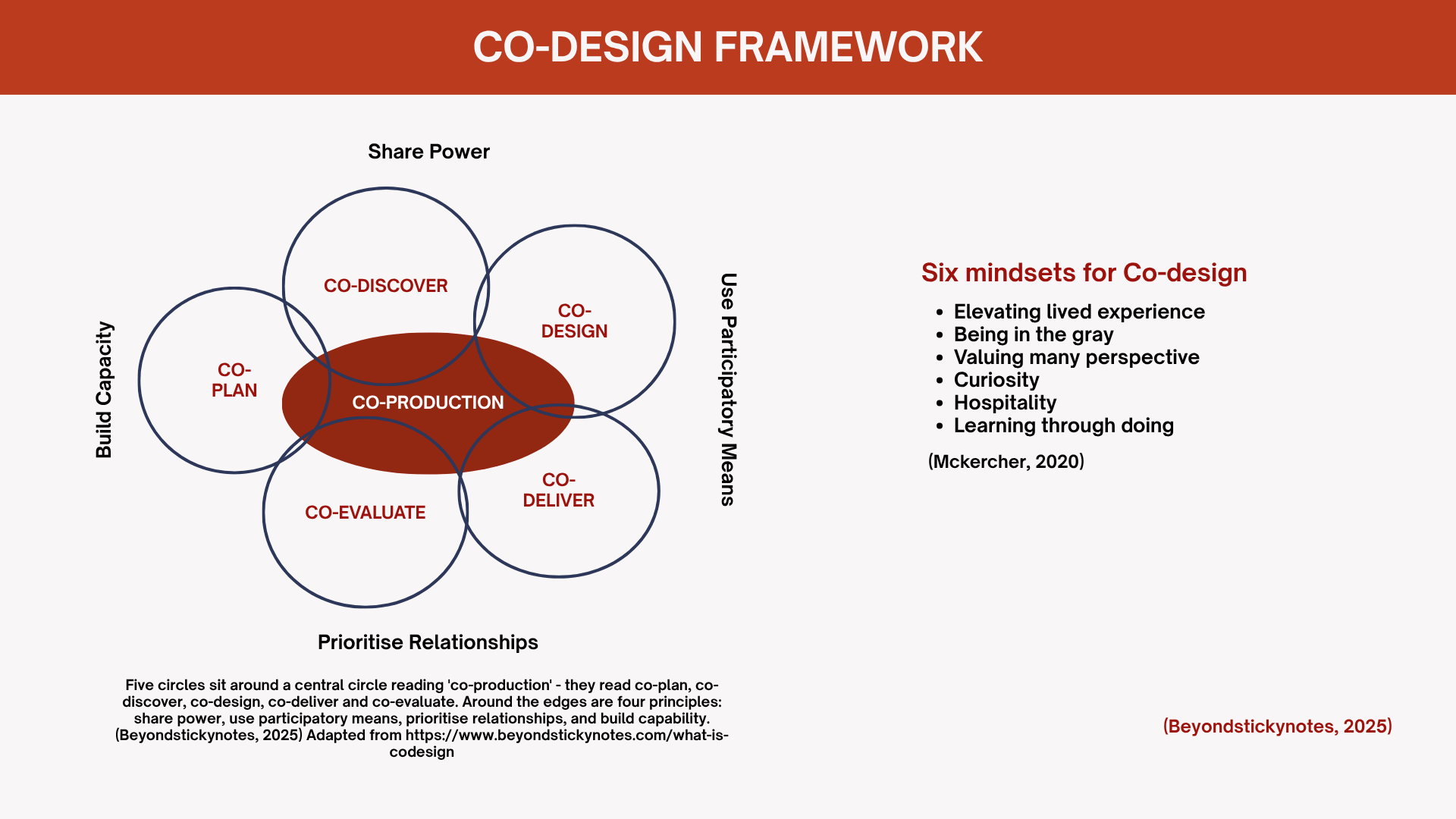
Co-design
Designing with, not for. This shaped the festival as community-led, with Yalanji decision-making built into every stage of the blueprint.
Double Diamond
A non-linear model where research insights drive iterative solutions. It structured the movement from problem research into this design response.
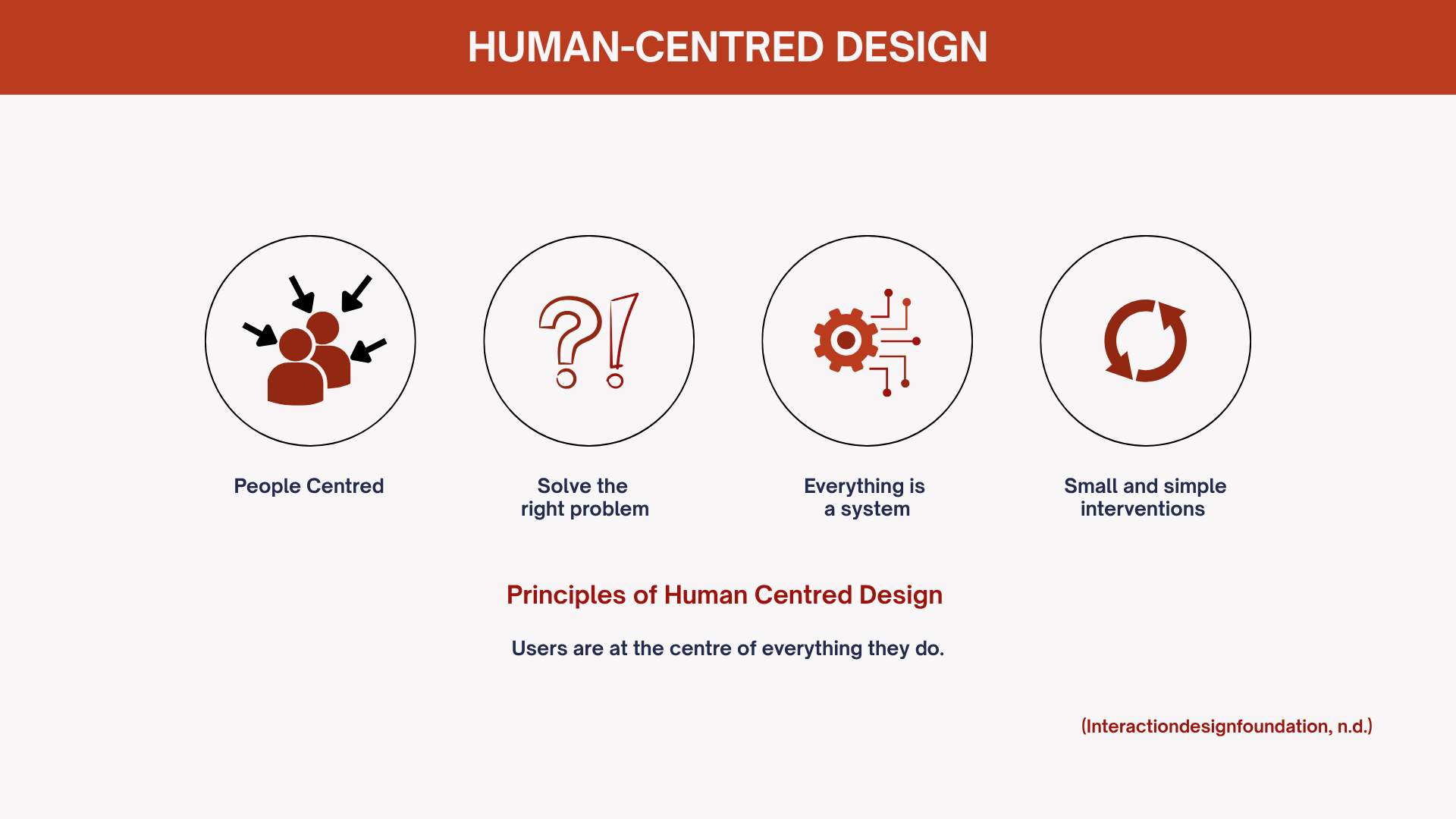
Human-Centred Design
Anchored the personas and journey maps in the real, gendered cultural roles of the community.
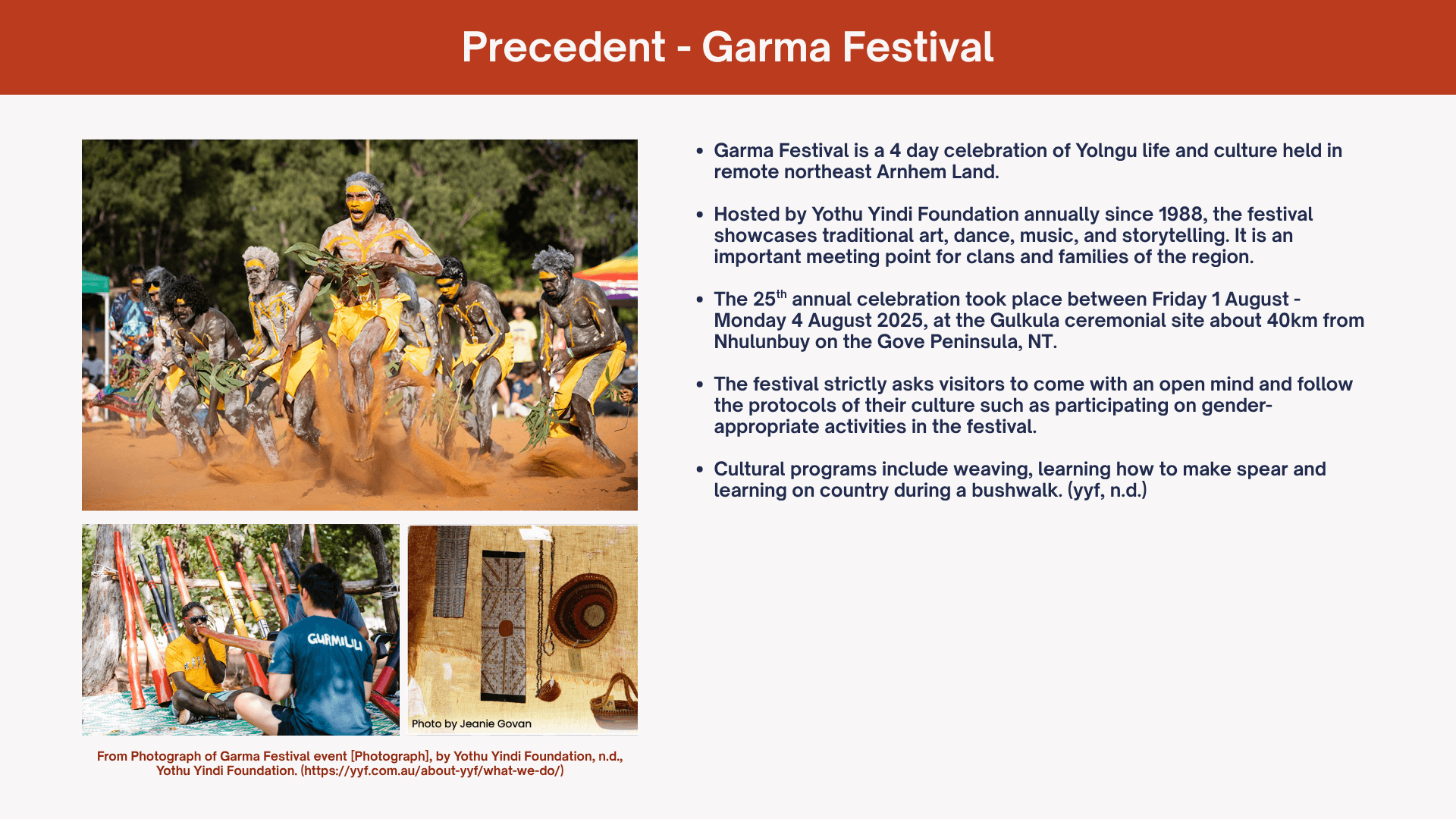
Garma Festival showed a remote community festival can carry culture, and set its own protocols.
Garma is a four-day celebration of Yolngu life and culture in remote northeast Arnhem Land, hosted by the Yothu Yindi Foundation since 1988. A major meeting point for clans, it showcases art, dance, music, and storytelling, and asks visitors to arrive with an open mind and follow cultural protocols, including gender-appropriate participation. It gave Bama Festival both a model and a permission structure to design around.
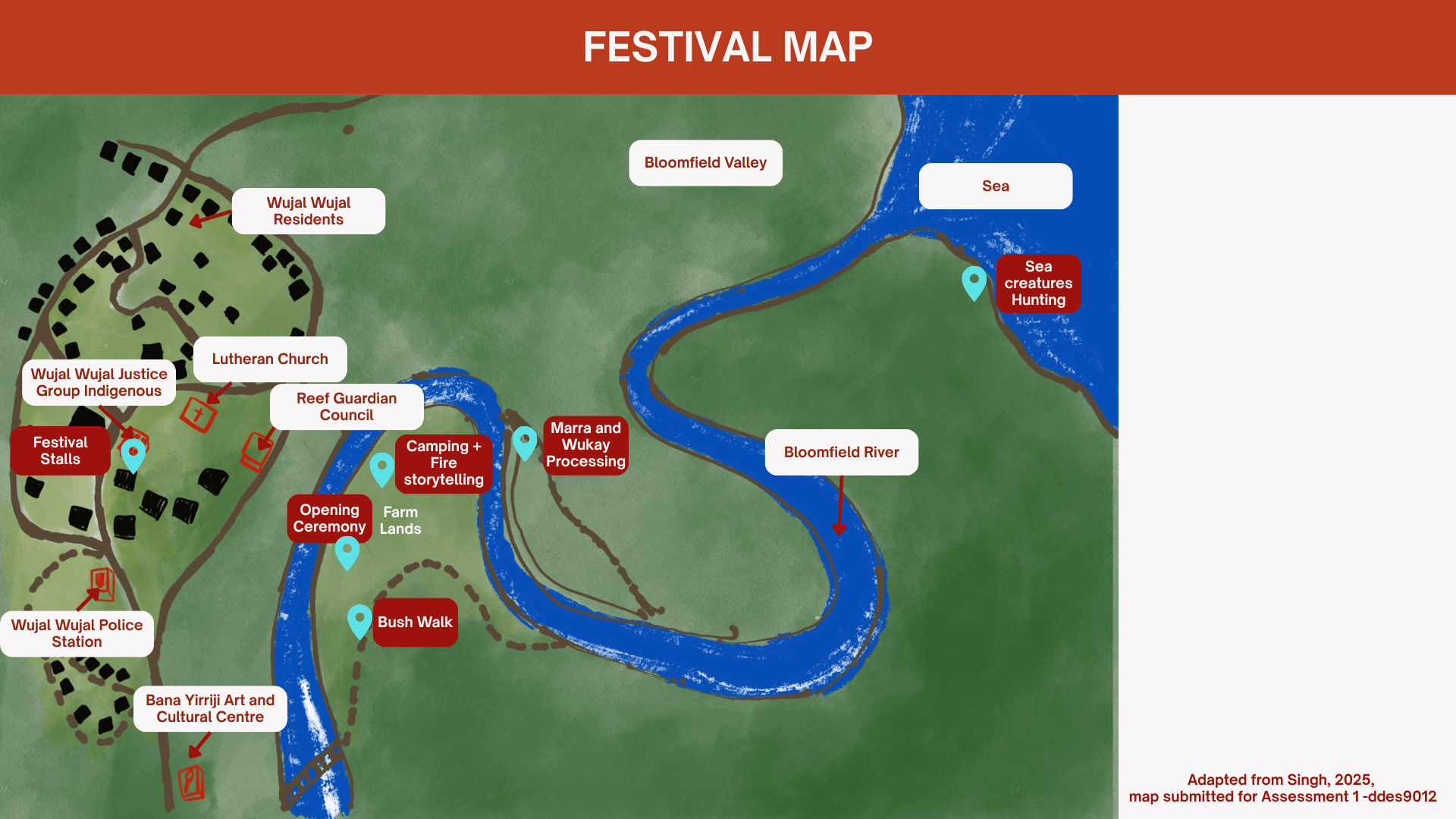
Bama Festival: three days, timed to the early dry season when Yalanji fire practice begins.
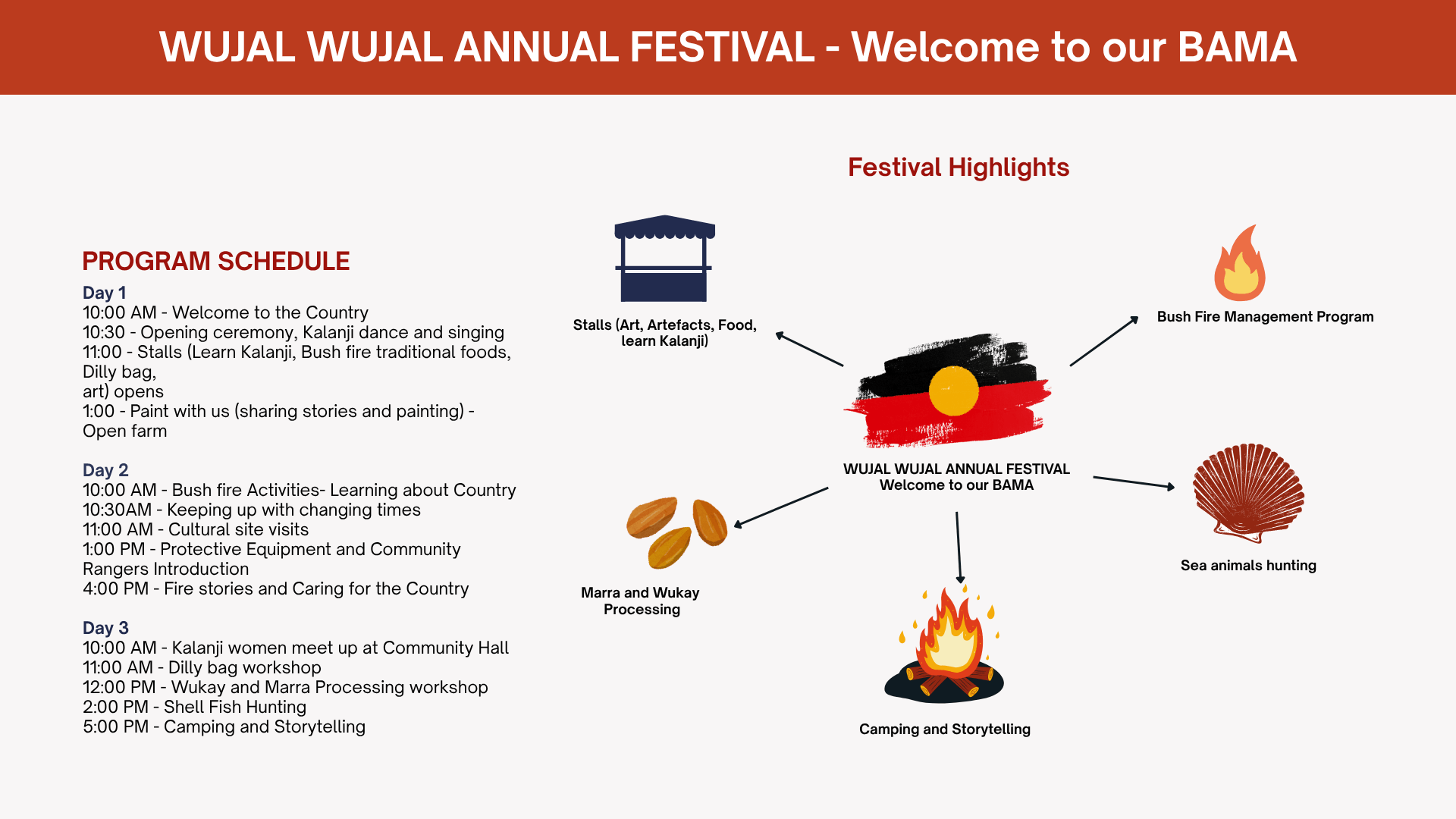
Bama is a community-led annual festival in Wujal Wujal, held in September, the early dry season and the main time for cultural fire burning. It pairs cultural activities with bushfire management, structured around the community’s gendered cultural roles.
Day 1
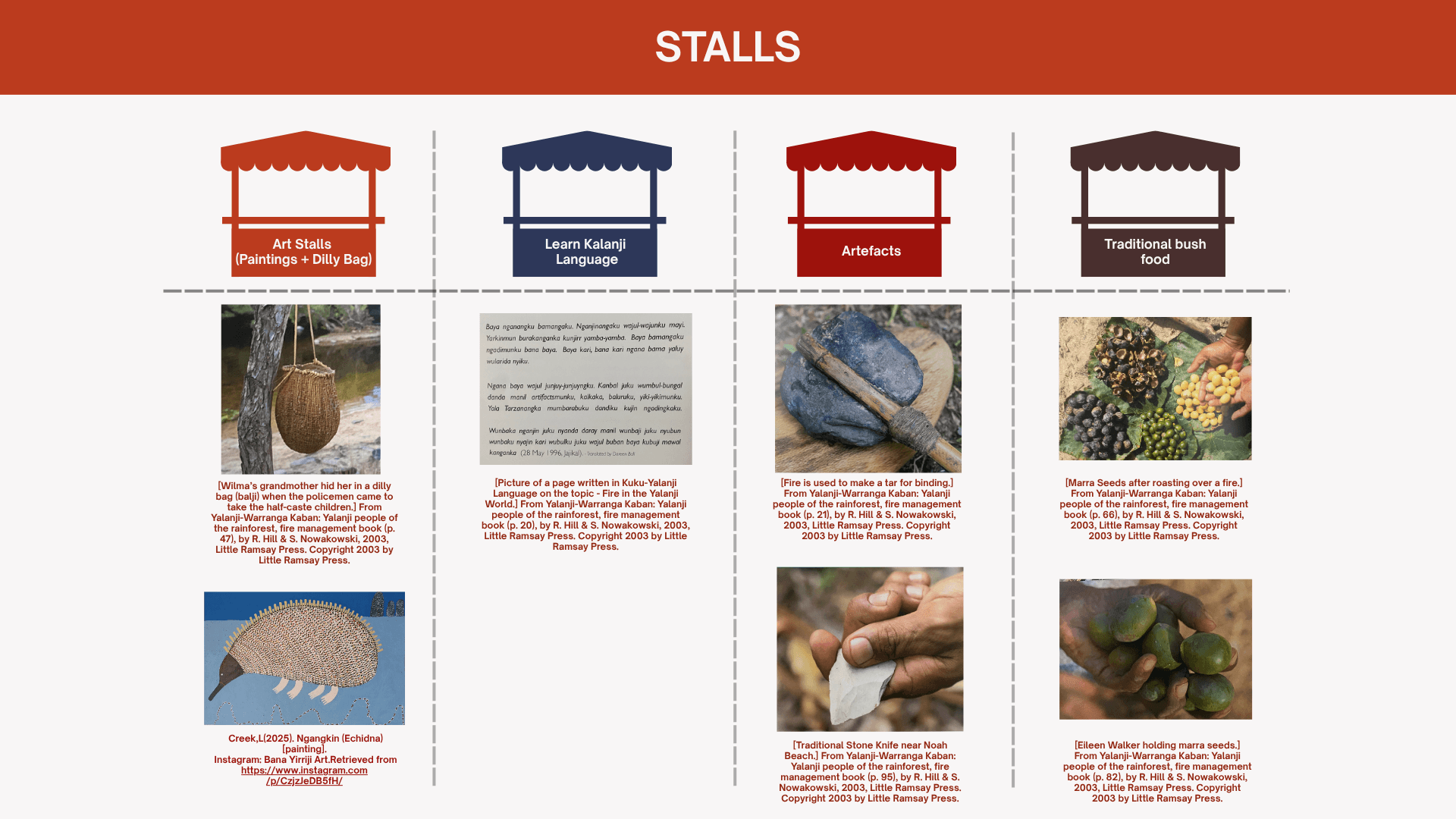
Opening ceremony with Yalanji cultural dance at the farmlands; stalls open at the Community Hall; the day closes with dreaming stories and painting.
Day 2 — led by Yalanji senior men
Fire activities: bushwalks, visits to cultural sites, learning about jimal sticks, and fire stories to close.
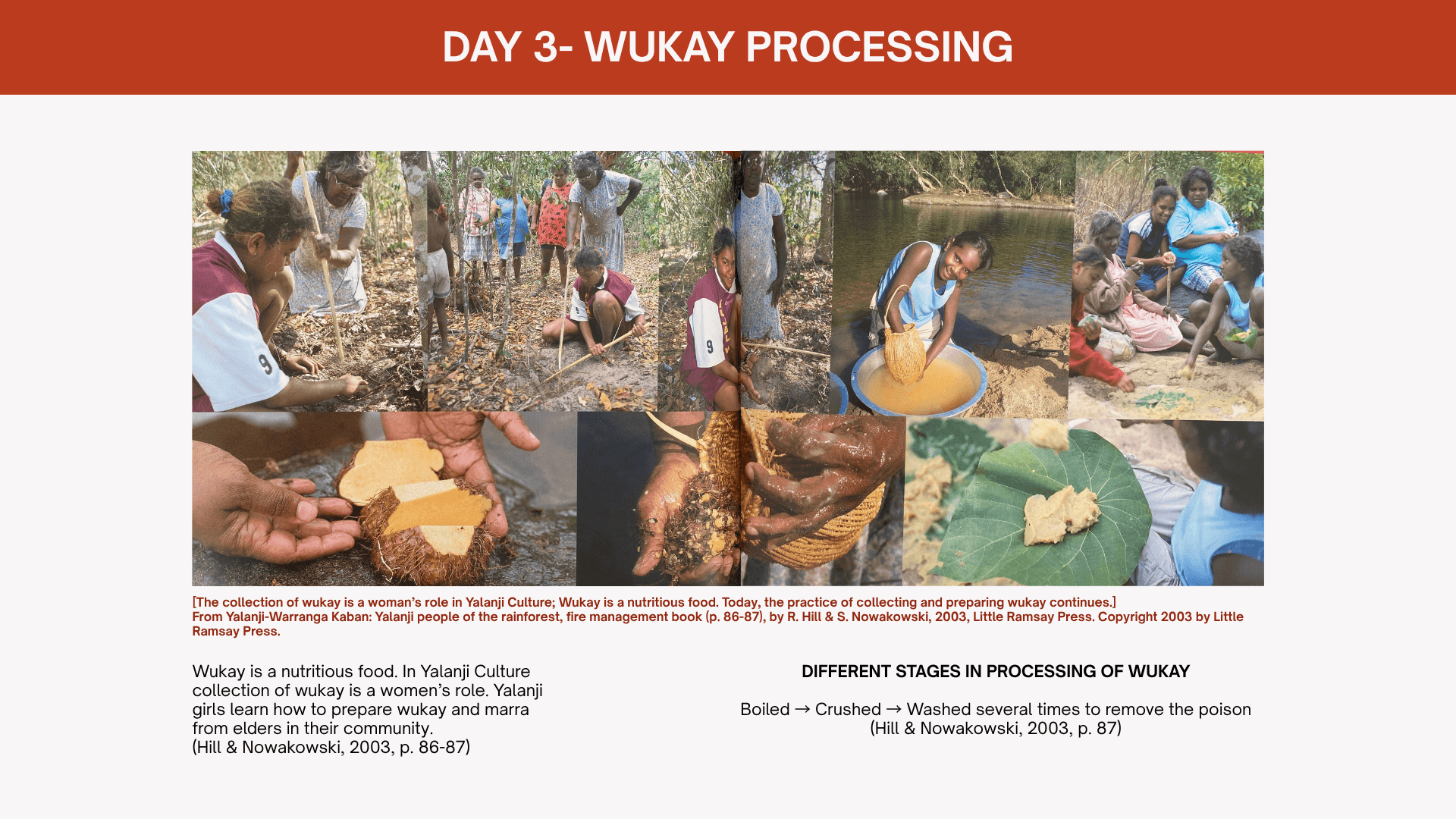
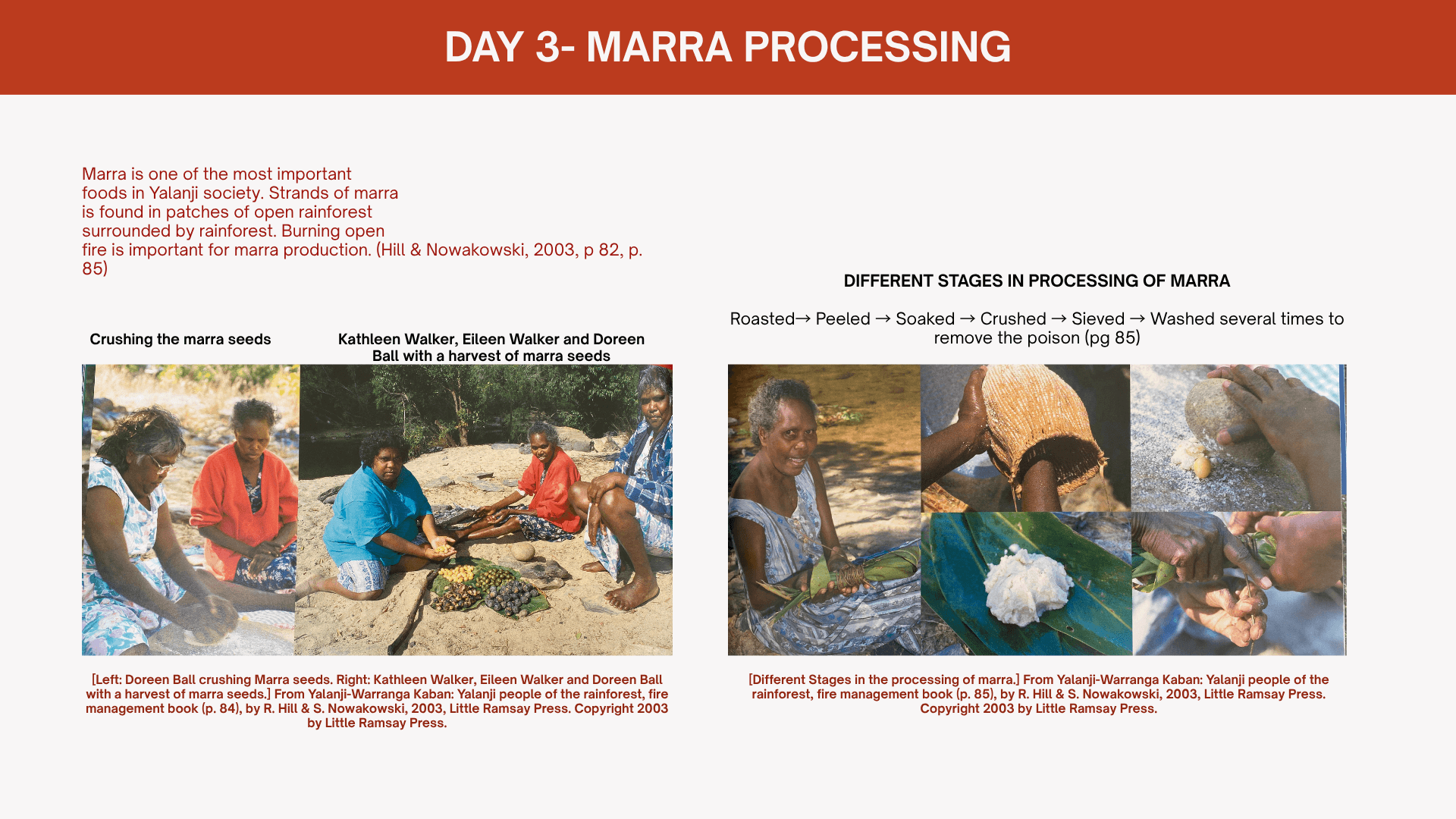
Day 3 — Yalanji women’s cultural practices
Wukay and marra collection and processing, weaving dilly bags, and sea-creature hunting. The festival ends with camping and shared dreaming stories.
Three generations, one shared motivation: keeping Yalanji culture alive.
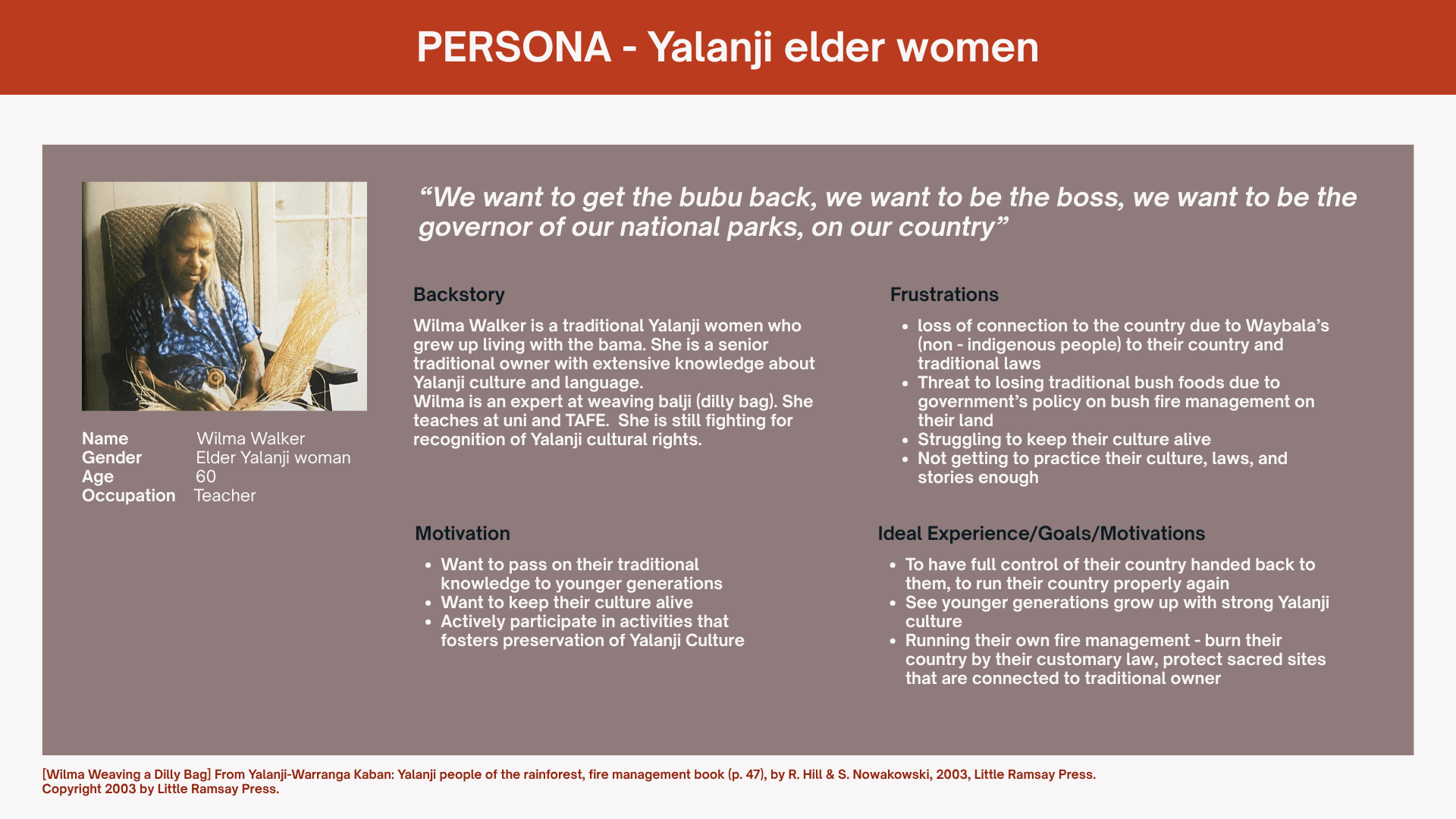
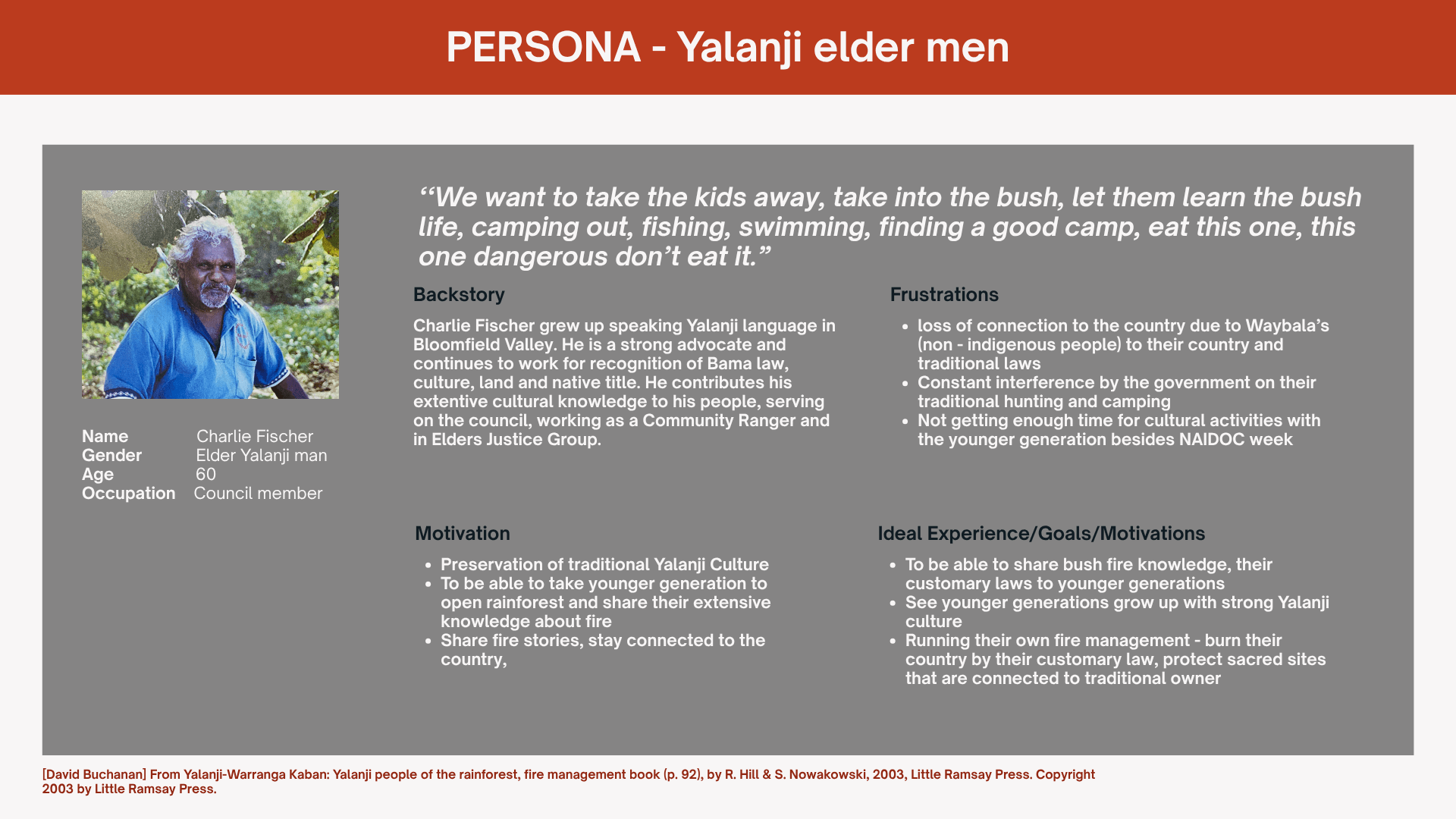
These personas are research-based composites, developed from secondary research. Photographs and quotes are reproduced with full attribution from Hill & Nowakowski (2003), Yalanji-Warranga Kaban, a publication documenting Yalanji culture. Names shown in image captions credit the source; persona names are illustrative.
Elder Yalanji woman
Motivated to pass traditional knowledge to younger generations and see them grow up strong in Yalanji culture.
Elder Yalanji man
Motivated to share bushfire knowledge and customary laws with younger generations, and keep the connection to Country alive.
Younger Yalanji member
Studying away from home, reconnecting with culture mostly during NAIDOC week, motivated to know Yalanji culture by heart and see it preserved.
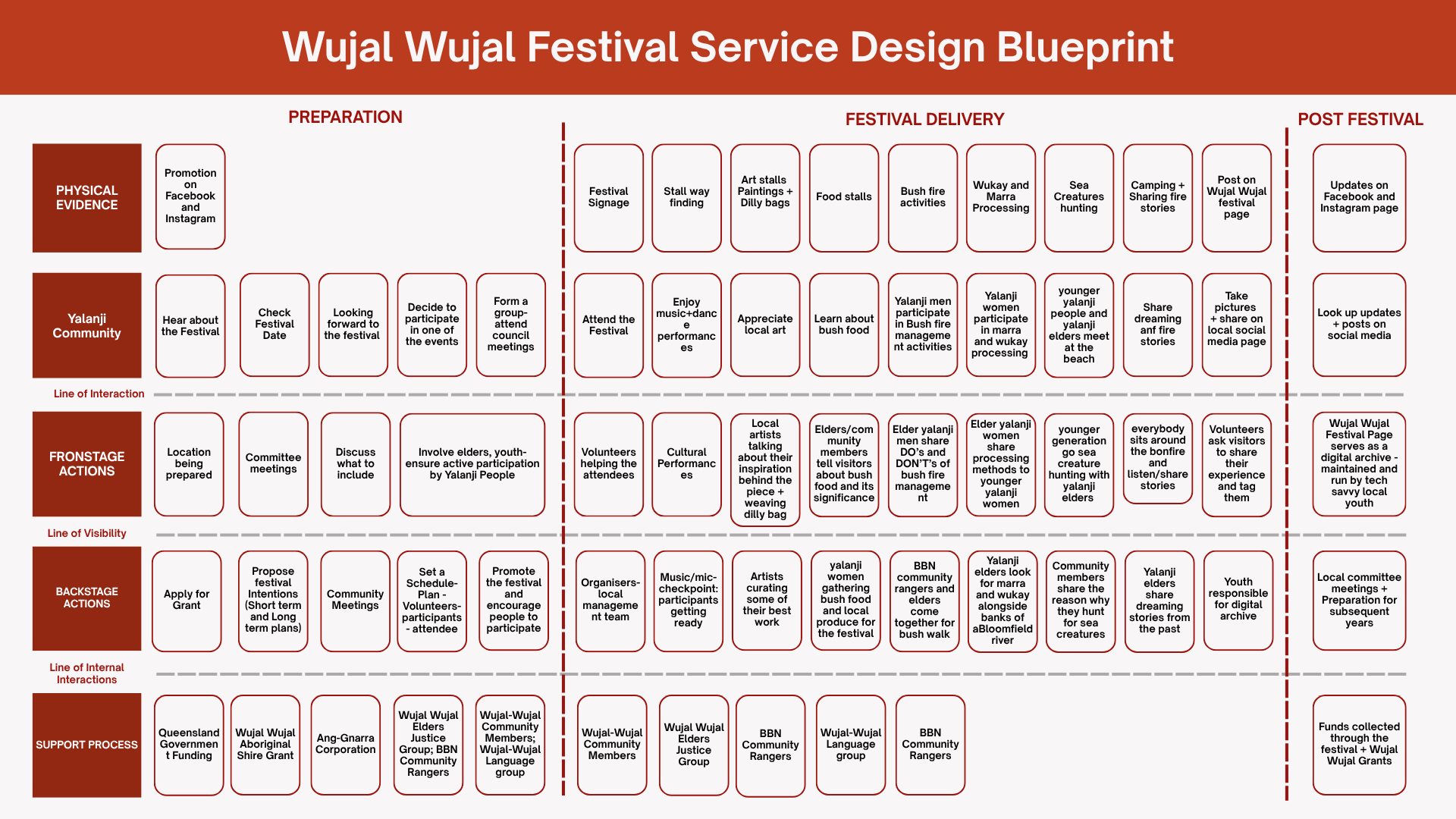
A festival is a service, not an event, so I mapped every actor across three phases.
The service blueprint spans preparation, festival delivery, and post-festival, with the lines of interaction, visibility, and internal action that separate what participants see from the work behind it. Preparation secures grants and has BBN Rangers survey cultural sites before any fire activity. Delivery ensures active participation from every part of the community. Post-festival, a Yalanji youth-run social media page and website become a living digital archive, carrying the culture forward and building the next year. Real support organisations are named at each stage: Wujal Wujal Aboriginal Shire Council, the Elders Justice Group, BBN Community Rangers, the Wujal-Wujal Language Group, and Queensland Government funding.
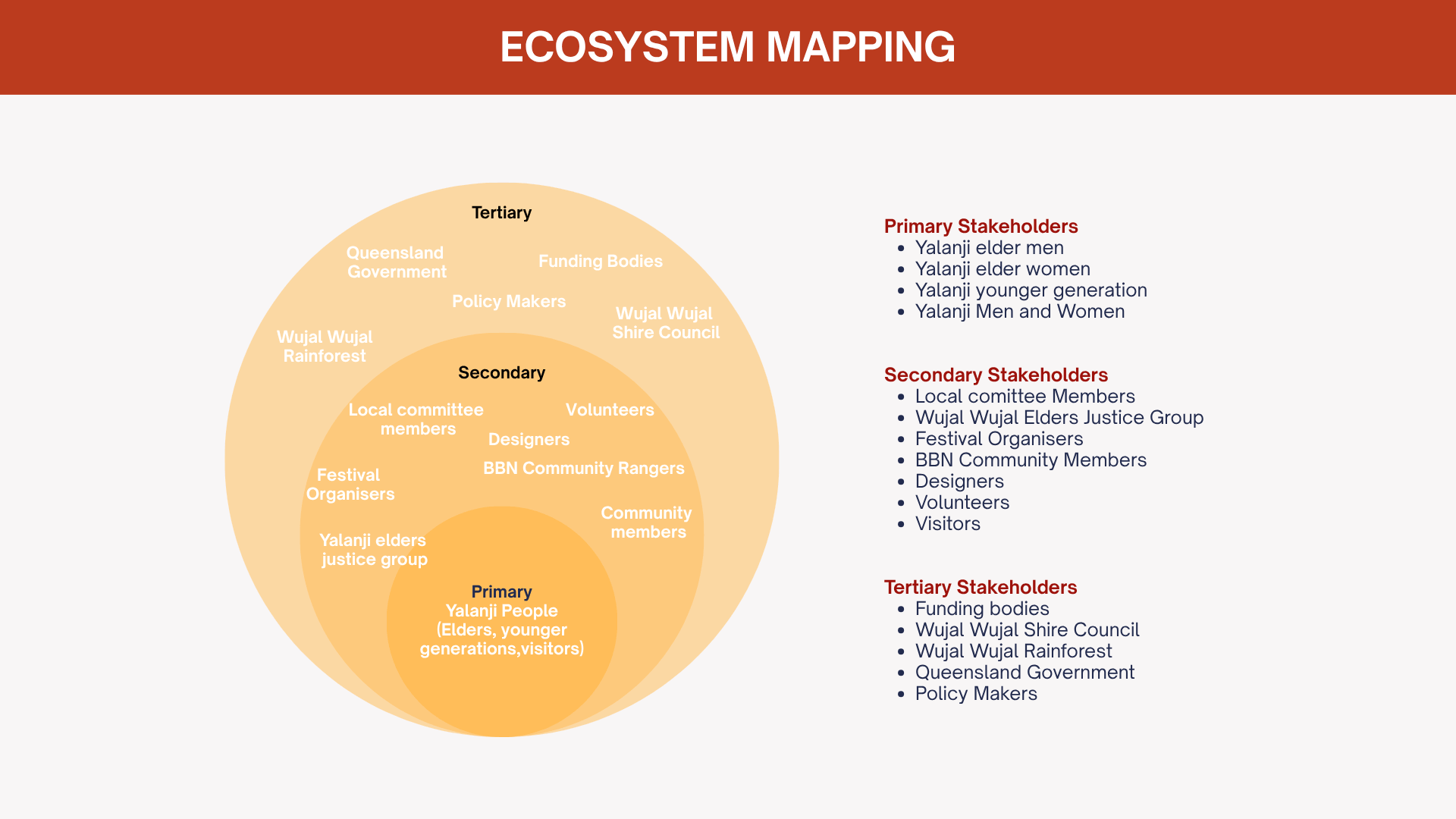
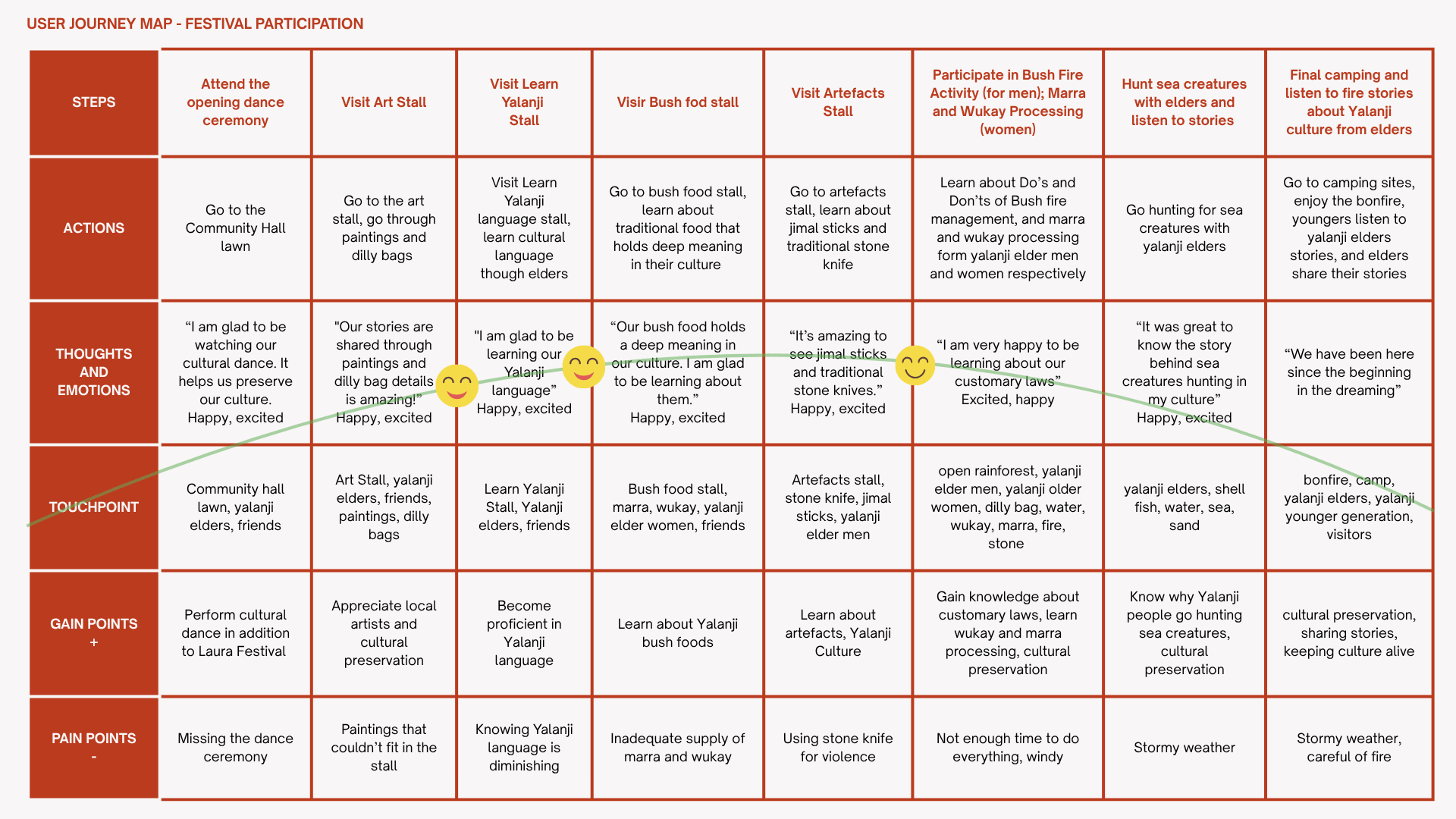
Supporting the blueprint: an ecosystem map of primary, secondary, and tertiary stakeholders; two user journey maps tracing actions, emotions, touchpoints, and pain points; a hand-drawn festival map placing each activity across Wujal Wujal; and detailed stall, program, and cultural-practice diagrams.
What I hold honestly: this is a proposal grounded in secondary research, not co-design in practice.
Bama Festival uses a co-design framework, but it was built from secondary research and existing community documentation with tutor guidance, not direct Yalanji engagement. That gap is real: genuine delivery would require Yalanji leadership, consent, and co-design at every stage, and nothing here should stand in for that. My tutor also offered a sharp real-world note I hold openly, that in practice the more responsible first move may be to improve funding prospects for the community’s existing cultural infrastructure, the art centre and the Laura Festival, rather than propose an entirely new service. I take that seriously. What this project gave me was the harder, more valuable lesson: how to design respectfully within a cultural context that is not my own, leading with a First Nations framework, citing every source, and knowing where my authority as a designer ends.
References